


Water plays a bigger role in daily life than most of us realize. We drink it, cook with it, clean with it, wash clothes, shower, and rely on it for countless household and business tasks. So when water quality or convenience becomes an issue, the effect can be surprisingly noticeable.
The good news is that modern water treatment doesn’t have to be complicated. There are options for homeowners, offices, restaurants, and other businesses that can make water easier to manage without turning the whole process into a chore. From renting treatment equipment to arranging regular salt deliveries, the right service can take much of the hassle off your plate.
Why Water Treatment Needs Can Be Different
No two properties use water in exactly the same way. A small family home might mainly care about drinking water, hard-water buildup, and better-tasting water. A restaurant, meanwhile, may use hundreds or even thousands of gallons each day and have very different requirements.
That’s why choosing a treatment solution based on actual water conditions is important. Factors such as hardness, sediment, taste, odor, water pressure, and household consumption can all influence what type of equipment makes sense.
It’s tempting to buy the first system that looks impressive online, but that’s not always the smartest move. A system should solve a real problem rather than create a new one.
Renting Can Make Treatment More Accessible
Not everyone wants to purchase expensive treatment equipment upfront. This is especially true for renters, businesses watching their budgets, or property owners who aren’t sure how long they’ll remain in the same location.
That’s where water treatment system rentals can be useful. Renting equipment can reduce the initial financial commitment while still giving a property access to professional treatment technology.
Depending on the provider, rental arrangements may include equipment servicing, filter replacement, or other maintenance support. This can be appealing for people who would rather have someone else handle the technical details.
For businesses, renting may also make budgeting easier. Instead of dealing with a large upfront purchase, the cost can sometimes be spread into predictable payments. It’s not automatically the best option for everyone, but it’s certainly worth considering when flexibility matters.
Don’t Underestimate the Importance of Water Softening
Hard water is a common issue in many areas. Calcium and magnesium can build up on faucets, showerheads, appliances, and plumbing components. You might notice white spots on dishes or find yourself constantly cleaning mineral deposits from bathroom fixtures.
Water softening can help reduce the minerals responsible for this buildup. But traditional softeners often depend on salt, which means the supply needs to be monitored and replenished.
For busy households, remembering to check salt levels isn’t exactly the highlight of the week.
Making Salt Management Less of a Chore
A salt delivery service can take some of that responsibility away. Instead of waiting until the softener is nearly empty and then making an emergency trip to buy several heavy bags, scheduled delivery can keep the necessary salt available.
This can be particularly convenient for older homeowners, busy families, large properties, and businesses where water softening is essential to daily operations.
Regular delivery also provides a little peace of mind. You don’t have to wonder whether the system is going to run out at an inconvenient time.
The exact delivery schedule will depend on water usage and the size of the softener, so it’s worth choosing a plan based on actual consumption rather than simply guessing.
Drinking Water Deserves Its Own Consideration
Whole-property treatment and drinking-water treatment aren’t necessarily the same thing. Water that is suitable for bathing and cleaning may still have a taste or odor that makes you less enthusiastic about drinking it.
This is where dedicated drinking water systems can provide another layer of convenience. Depending on the technology used, these systems may focus on reducing unwanted tastes, odors, sediment, or certain dissolved substances.
Some are installed under the kitchen sink, while others can be designed for offices or larger commercial spaces. The best choice depends on what the water test shows and how much treated drinking water is needed.
There’s something simple but satisfying about having a glass of water that tastes clean and refreshing without needing to buy bottled water every few days.
Businesses Have More to Think About
For a commercial property, water quality isn’t only about personal preference. It can affect equipment, operations, employees, customers, and operating costs.
Restaurants, for example, rely on water for cooking, cleaning, ice production, dishwashing, and beverages. Hotels and offices may need dependable drinking water for employees and guests.
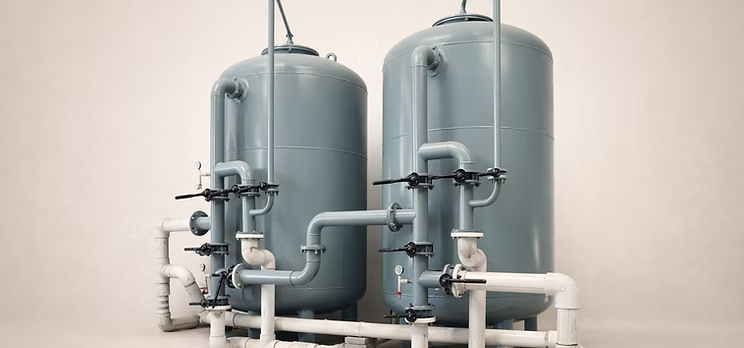
A water treatment system that’s perfectly adequate for a family of four might be completely unsuitable for a busy business. Commercial systems need to account for flow rates, peak usage, available space, maintenance access, and the specific water-quality concerns involved.
That makes professional evaluation especially valuable for larger properties.
Maintenance Keeps the Investment Working
One mistake people sometimes make is thinking that installing a treatment system means the work is finished. In reality, maintenance is part of the deal.
Filters need to be replaced. Softener settings may need adjustment. Salt levels have to be monitored unless delivery is handled automatically. Components should also be checked periodically to make sure everything is working as expected.
Neglecting maintenance can reduce performance and potentially shorten the useful life of the equipment. A system doesn’t have to be difficult to maintain, but it does need some attention.
Fortunately, many providers offer service plans that make routine maintenance much easier.
Look at the Full Cost, Not Just the Price Tag
When comparing water treatment options, it’s easy to focus on the initial monthly payment or purchase price. But there are other costs worth considering.
Ask about filter replacements, servicing, salt, installation, repairs, and contract terms. A cheaper system may not remain cheaper if replacement parts are expensive or maintenance is difficult.
Likewise, a rental arrangement that includes regular servicing may provide more value than a basic equipment-only plan.
The right decision isn’t always the one with the lowest price. It’s the one that provides reliable performance without creating unnecessary work or surprise expenses.
A Little Convenience Goes a Long Way
Water treatment should ultimately make life easier, not add another complicated task to an already busy schedule. Whether that means renting equipment instead of purchasing it, arranging regular salt deliveries, or installing a dedicated drinking-water system, modern options can be tailored around how people actually live and work.
Start by understanding your water and identifying the problems that matter most. Then compare solutions based on performance, maintenance, cost, and convenience.
Because at the end of the day, the best water treatment system is the one you barely have to think about. It quietly does its job, keeps water comfortable and dependable, and lets you get on with everything else that matters.